How long wedding makeup really takes, hour by hour
Nobody books a makeup artist wanting to talk about scheduling. But after ten years of wedding mornings I can tell you that the ones which felt calm and the ones which felt frantic were rarely different in talent or weather or how many people were in the room. They were different in arithmetic. So here is the arithmetic, openly, so you can check anyone’s timeline against it, including mine.
The numbers I actually work from
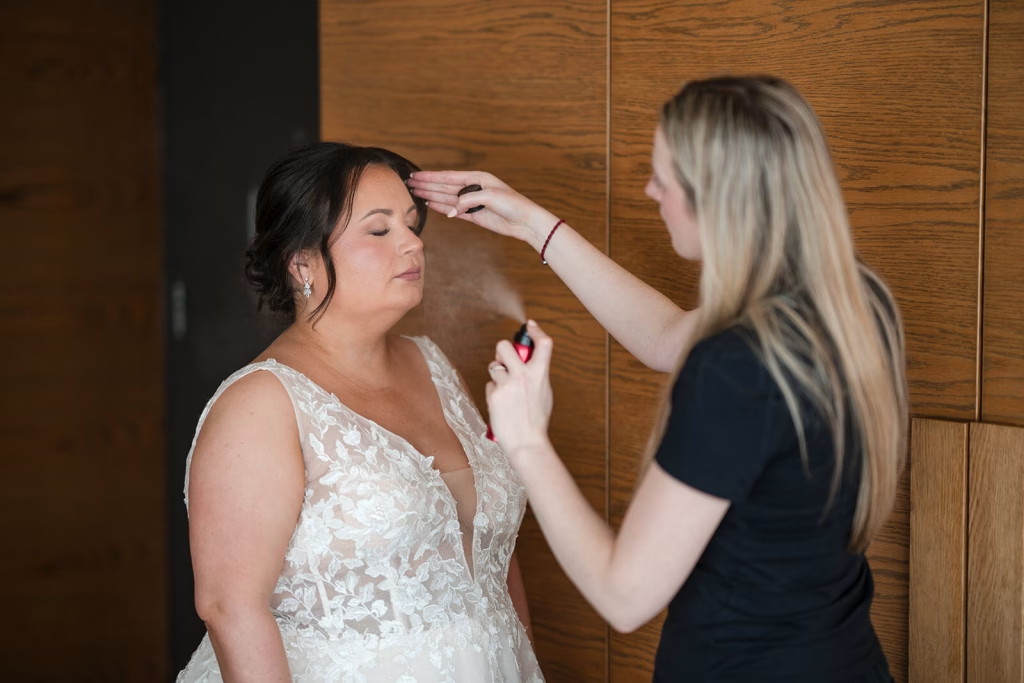
A bride takes sixty to seventy-five minutes. That is longer than everyone else for reasons that are not vanity: there is more detail, we check it in three different lights, and there is usually a conversation happening at the same time. Every other face takes forty to forty-five minutes. Mothers sometimes take a little longer, not because the makeup is harder but because they have often not sat in a makeup chair in years and it is worth going slowly.
So a bride plus three bridesmaids is roughly three hours and ten minutes of pure chair time. Add a mother and you are at just under four. Those are the honest figures, and they do not include anybody arriving late, the dress needing help, or the photographer wanting a shot of you holding a coffee you have not touched.
If somebody quotes you thirty minutes a face across the board, ask what happens if one person runs over. The answer tells you whether they have built a timeline or a wish.
forty five minutes a face, honestly
Work backwards, never forwards
This is the single thing that fixes most mornings. Do not start at the time you plan to wake up and count forwards. Start at the fixed point and count back.
The fixed point is not the ceremony. It is the moment you need to be in the dress with your makeup finished, which is usually when your photographer wants you for portraits, which is usually an hour and a half to two hours before the ceremony itself. Work back from there: portraits, then dress, then buffer, then the last face in the chair, then every face before it.
Do that and the start time is whatever it is. It might be earlier than you hoped. That is useful information six months out, and horrible information at seven in the morning on the day.
Where mornings actually go wrong
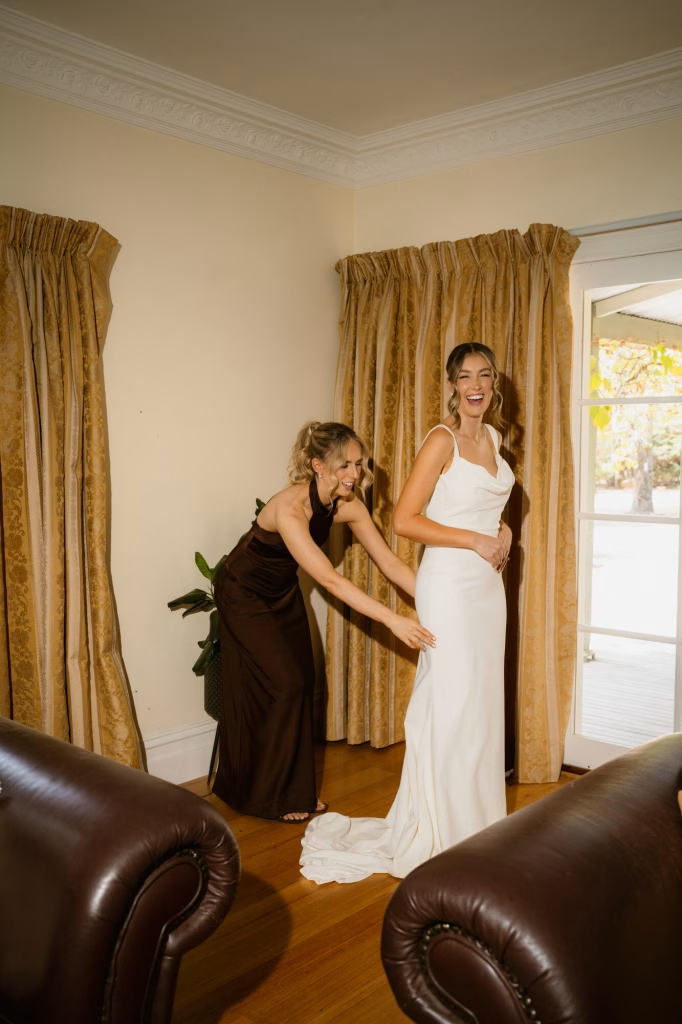
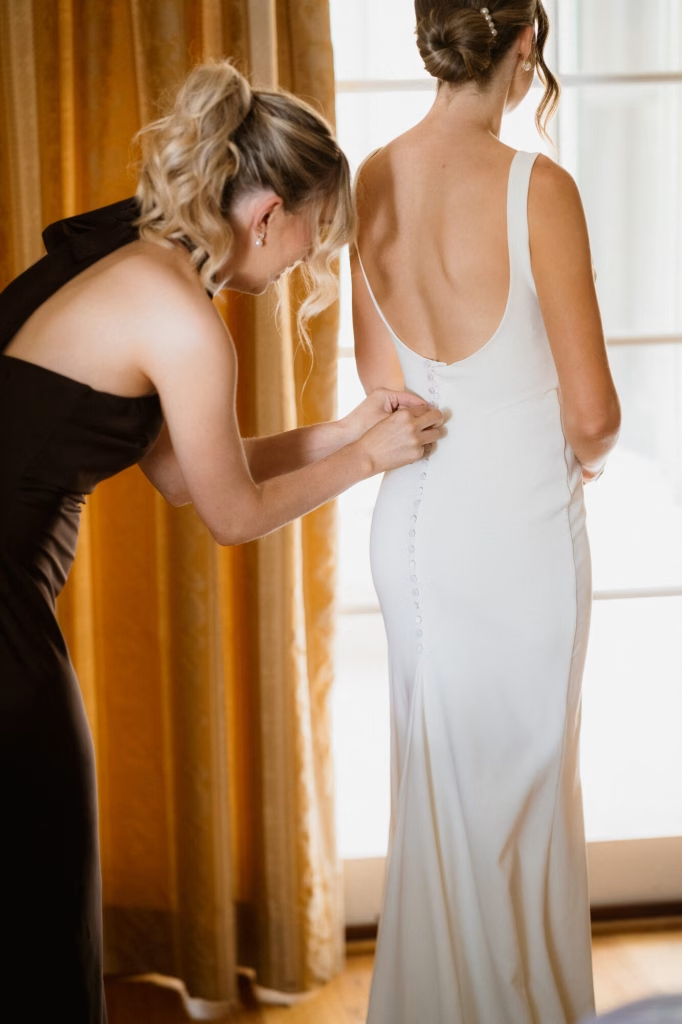
It is almost never makeup that breaks a timeline. In my experience it is one of four things, in roughly this order. Someone arrives forty minutes late and the whole run sheet shuffles down. The room is too dark, so everything takes longer and looks different once you step outside. Nobody allowed time for the dress, which is never a two-minute job when there are buttons. Or the timeline was written with no buffer at all, so the first small delay became every subsequent delay.
a timeline with no buffer is not a timeline, it is a list of times you are about to miss
None of these are dramatic. That is exactly why they get missed. They are all boring, all predictable, and all solvable a month out with a piece of paper.
The order of the chair
Who sits when is not arbitrary, and it is worth being deliberate about it.
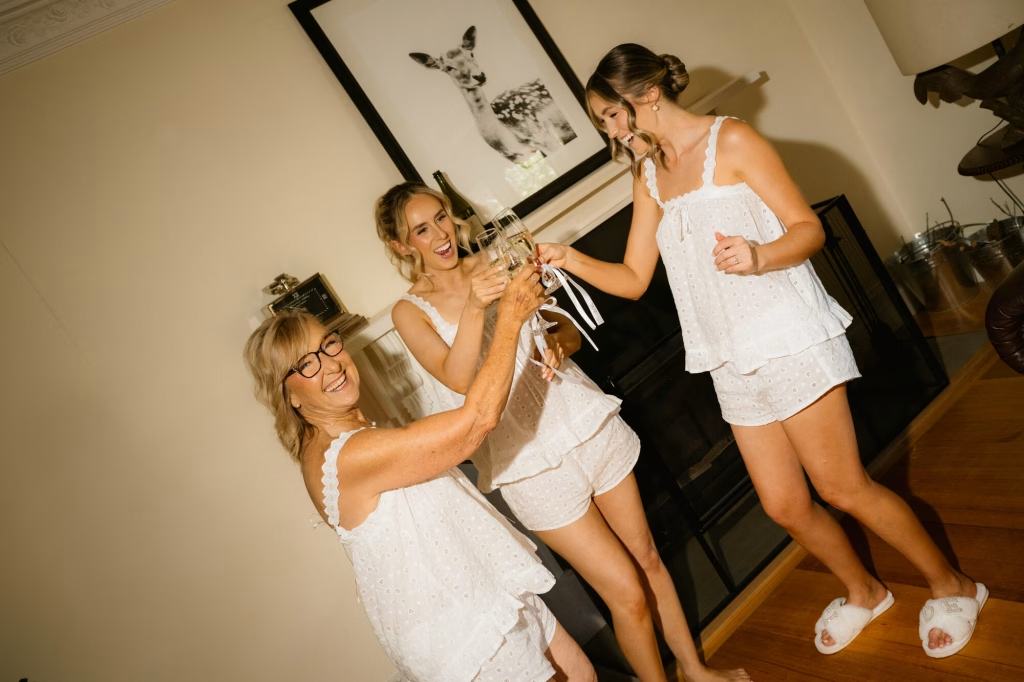
Anyone who needs to leave early, or who is also doing something else that morning, goes first. Mothers go early rather than late, because a mother who is still in the chair when the photographer arrives is a mother who will be tense in every photograph after it. The bride goes second to last. The very last slot belongs to whoever is most relaxed, because that person absorbs any overrun without it mattering.
The reason the bride is not last is simple. If she is last and anything has slipped, there is no time between the chair and the dress, and that is where the morning starts to feel like a rush even when it is only a few minutes behind.
Building your own
If you want to sketch it yourself before we ever speak, this is the whole method. Tick as you go, the list will hold your place.
Writing the run sheet
0 of 6
all sorted
Sketch your morning
Put your date and your numbers in and I will rough out the shape of it, including when I would want your trial to sit. It is an estimate rather than a run sheet, but it will tell you quickly whether the morning you have in mind actually fits.
plan your trial
Put your date in and I’ll sketch the timeline I’d suggest. Nothing is sent anywhere, it’s just for you.
Every run sheet ends up a little different. Send me your date through the booking form and I’ll do it properly.
Take the planner with you
Every bridal booking with me includes a written timeline, sent before the week arrives so you can approve it or argue with it. What else is included is on the bridal page, and if you would like me to write one for your morning, send me the date through the booking form.
Quick answers
- How long does bridal makeup take on the wedding day?
- Around sixty to seventy-five minutes for the bride, and forty to forty-five minutes for everyone else. Those two numbers are what every timeline I write is built from.
- What time should wedding hair and makeup start?
- Work backwards from the moment you need to be in the dress, not forwards from when you wake up. For a bride and three others that usually lands four to four and a half hours before photographs.
- How much buffer should a wedding morning have?
- Thirty minutes at the absolute minimum. I build in forty-five. It gets used most times, and on the mornings it is not needed you get to sit down with a coffee instead.
- Should the bride go first or last?
- Second to last, almost always. Going last leaves nothing between you and the dress if anything slips, and going first means your makeup has been sitting an hour longer than it needed to.